

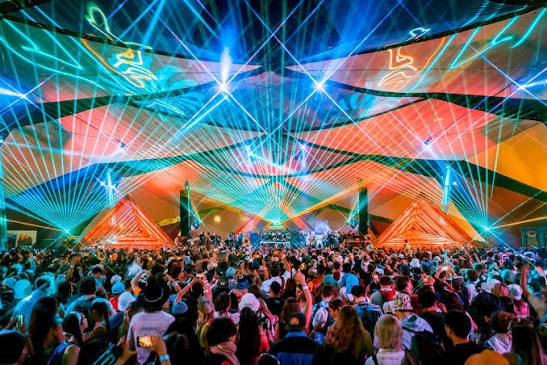
Three weeks out from the first arena date, the production manager is at the kitchen table with a budget spreadsheet, and the laser line matches the number the artist’s manager quoted six months ago. The number is off by a wide margin. The fixture rental is in there, but the operator’s day rate isn’t. Neither is the variance paperwork, the extra freight case, the per-venue site survey, or the insurance rider that the booking agent waved off as nothing to worry about. By load-in, the laser package has roughly doubled.
That doubling is the real story of concert lasers. The beams get the applause. The invoice is a second light show, and most artists only see it after the first run of dates.
The Rental Quote Is the Smallest Number on the Page
The sticker on a touring laser package reads like a lighting invoice, and that’s where the confusion begins. That range tells an artist almost nothing, because the hardware is rarely the biggest cost on the page.
Design time, control software licenses, and compliance work usually add up to more than the fixtures themselves. A single tour cue list can take a designer weeks to build and tune, and that labor rides with the tour whether the artist plays ten dates or forty. Many tours route operators through a formal safety training program rather than relying on whoever happens to be on the lighting crew that tour, and that credential sits in the budget alongside the design hours.
The Variance Is a Paperwork Expense With a Deadline
Any laser bright enough to matter on an arena stage is a Class 3B or Class 4 device, and in the United States those cannot be used in a public show without federal clearance. A variance is required for any show that uses lasers above a very low power threshold, and getting one is not a same-week errand. It involves engineering drawings, operator qualifications, a show plan, and lead time measured in weeks. The cost is partly the filing itself and partly the specialist who prepares it.
Miss the deadline and the laser rig becomes a very expensive road case that sits dark for the night. That risk is why experienced production teams build the paperwork into the budget before the first fixture is spec’d.
The Operator Is a Salary, Not a Button-Pusher
Every show with audience-visible beams needs a trained person watching the output in real time, with authority to kill the emission the moment anything drifts. The ILDA safety overview spells out the reasoning: the standards call for an operator who can monitor the show and terminate it on the spot. That person travels with the tour, drawing a day rate, per diems, flights, and a hotel room, same as any other key crew member.
Add the venue-side costs and the line keeps growing:
- Site surveys. Each new room needs beam paths measured against the audience, and that work bills by the hour.
- Insurance riders. General liability for a tour often needs a specific laser endorsement, and the premium reflects the risk.
- Freight and power. More road cases, more weight, more dedicated circuits at load-in.
Artists who treat the laser rig as part of the production, instead of a special effect bolted on at the end, build the operator, the variance, and the insurance into the number from day one. That number is bigger. It is also the honest one.


