
Veneer planning often begins with a visual wish: brighter teeth, neater edges, a more even smile, or a change in proportion. Those goals are legitimate, but the treatment only makes sense when the dentist also understands tooth health, enamel, bite, gum levels, existing restorations, and the amount of change being requested.
Porcelain veneers are not simply a colour layer. They are part of a wider plan involving preparation, bonding, shade design, texture, edge shape, and maintenance. When the planning is careful, the result can look natural and controlled. When the planning is rushed, the teeth can look too uniform or the mouth can be left with avoidable maintenance challenges.
The best consultation therefore moves between appearance and function. It asks what the patient wants to change, what the teeth will safely allow, and how the result will be looked after in the years that follow.
Dr. Sahil Patel of MaryleboneSmileClinic explains that porcelain veneers London planning should begin with suitability rather than shade alone. He advises patients to ask how much enamel is present, whether the bite places pressure on the front teeth, how the gums frame the smile, and whether old fillings or crowns affect the design. His guidance is that veneers work best when they are planned as part of the whole mouth rather than as isolated front surfaces. The consultation should also explain preparation, maintenance, and realistic limitations before a patient decides. That gives the patient a clearer understanding of whether veneers are the right route or whether whitening, alignment, bonding, repair, or staged care should come first.
This broader planning does not make the process more complicated for the sake of it. It makes the result more personal, more maintainable, and easier for the patient to understand.
A veneer plan should answer three questions at once: what will improve visually, what the teeth can safely support, and what care will be needed after the smile is complete.
Suitability Starts With Enamel and Tooth Structure
Veneers rely on healthy tooth structure and careful bonding. The dentist needs to assess enamel, existing fillings, cracks, wear, sensitivity, and the overall strength of each tooth. A tooth that looks suitable from the front may have a history that changes the plan.
Enamel matters because it influences how conservative preparation can be and how predictably the veneer bonds. Teeth with large old fillings, heavy wear, or limited enamel may need a different restorative approach. The patient should understand this before comparing designs.
Suitability is not a yes-or-no question based only on appearance. It is a clinical judgement about whether veneers can deliver the desired change while respecting the health and future care of the teeth.
Tooth structure also influences whether the plan should include all visible teeth or only selected teeth. Treating too few teeth can create a mismatch, while treating more teeth than necessary can be excessive. The dentist has to balance appearance with preservation.
Existing restorations complicate this decision. A tooth with a large filling may need a different design from a mostly untouched tooth, even when both sit in the same smile line.
Suitability also includes the patient’s decay risk and gum stability. A veneer margin placed into a mouth that is difficult to clean can become a maintenance concern. The dentist should address these foundations before final design.
Suitability also depends on how much change the patient wants. A small colour improvement may not justify the same approach as a broader change in shape, width, and symmetry. The dentist should match the treatment to the scale of the goal.
Shade Planning Should Include the Whole Smile
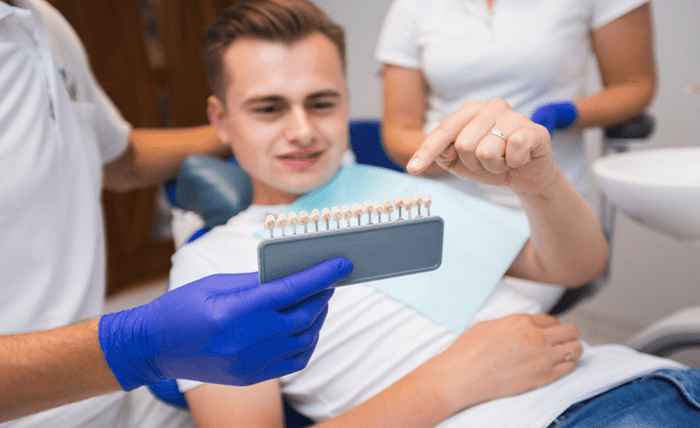
The shade of veneers has to work with natural teeth, skin tone, age, facial features, and any restorations that will remain visible. A very bright shade can look attractive in a close-up image but less natural in conversation if it does not fit the rest of the mouth.
Whitening may be recommended before veneer shade is finalised, especially when only some teeth are being treated. The dentist needs to know what colour the untreated teeth can realistically reach so the veneers do not appear disconnected.
Translucency and texture are just as important as shade. Natural-looking ceramics have depth, surface character, and subtle variation. The patient should be able to discuss whether they prefer a fresher natural result or a more noticeable cosmetic change.
Shade planning also needs patience because the patient may need time to decide how bright feels natural. Looking at shades in the surgery is useful, but the dentist may also discuss how the chosen colour will appear in daylight, photographs, and normal conversation.
If only upper teeth are being treated, the lower teeth still matter. The smile is seen as a whole, and a colour difference between arches can affect how natural the final result feels.
Shade decisions should not be rushed at the end of planning. The patient may need to compare options after whitening, cleaning, or trial design. A shade chosen too early can feel wrong once the rest of the mouth changes.
Shade planning should include the patient’s tolerance for contrast. Some people are comfortable with a brighter upper smile, while others want the upper and lower teeth to remain close in shade. This preference affects how the final design is perceived.
Shape Is Designed Around Speech and Expression
Veneer shape affects more than a still smile. It changes how the teeth show when the patient speaks, laughs, and rests. Edge length, corner shape, tooth width, and the curve of the smile all need to be judged in movement.
Trial designs, photographs, or provisional stages can help the patient understand proportion before the final ceramics are made. This is especially useful when the requested change involves lengthening teeth, closing spaces, or making the smile broader.
A natural design often keeps some individuality. Teeth do not need to become identical to look improved. Small differences in line angle, edge softness, and surface texture can keep the smile from looking artificial.
Speech is a practical test of design. Longer edges or changed contours can affect how the lips and tongue meet the teeth. Even subtle changes should feel comfortable when the patient talks.
A trial stage can help identify whether the proposed shape feels too long, too square, or too prominent. Adjusting those details before the final ceramics are made protects both comfort and confidence.
Expression also influences edge position. Teeth that look ideal in a posed smile may feel too long during speech or too visible at rest. The dentist should consider how the design behaves outside a still photograph.
Shape planning can also include the spaces between teeth. Closing a small gap with ceramic changes width and proportion, not only the gap itself. The dentist needs to show how that change affects neighbouring teeth and the overall smile.
Bite Forces Influence Longevity
Front teeth take pressure during biting, chewing, and sometimes grinding. If the bite places heavy force on planned veneers, the dentist needs to account for that before treatment begins. Ignoring bite can increase the risk of chipping, discomfort, or repairs.
Bite assessment may include checking wear patterns, jaw movement, muscle symptoms, and how the front teeth guide the bite. In some cases, alignment, adjustment, or a night guard discussion becomes part of the plan.
Patients should not view this as unrelated to appearance. A veneer that looks beautiful but sits in an unstable bite is harder to maintain. Function and aesthetics need to support each other.
Bite forces are especially relevant for patients with edge-to-edge bites, deep bites, grinding habits, or a history of chipped front teeth. Veneers can be planned in these mouths, but the risks and protections need open discussion.
A protective appliance may feel like a small detail, yet it can be important after treatment. The patient should know whether it is recommended and why it matters for the ceramic edges.
Bite planning can include deciding whether veneers are suitable on all requested teeth. Some teeth may carry more force than others, and the design may need to be adjusted rather than applied uniformly across the smile.
Bite planning is also relevant during provisional stages. If a trial or temporary design feels bulky or catches during movement, that feedback should be taken seriously before final ceramics are completed.
Preparation Should Be Explained Clearly
Patients deserve a clear explanation of whether tooth preparation is needed and how conservative it is expected to be. Some veneer cases involve minimal preparation, while others require more adjustment because of tooth position, old restorations, colour change, or the desired final shape.
The dentist should explain what is reversible, what is not, and how the teeth will be protected between stages if laboratory work is involved. This is part of informed consent, not an afterthought.
Understanding preparation helps the patient compare veneers with alternatives. Whitening, bonding, alignment, and contouring may offer smaller changes with less alteration in some cases, while veneers may be more suitable when the visual change is broader.
Preparation also affects emotional comfort. Some patients are comfortable with a more definitive treatment once they understand the reasons. Others prefer to explore whitening, bonding, or alignment first because they want to preserve more tooth structure.
Neither preference is wrong. The dentist’s role is to explain what each route can and cannot achieve, then help the patient choose a level of change that is suitable and understood.
Preparation conversations should include temporaries if they are needed. Patients often feel more comfortable when they know how the teeth will look and feel between appointments and what to do if a temporary feels rough or loose.
Preparation should be discussed alongside alternatives because it changes the nature of the decision. A patient may accept preparation when it clearly solves several concerns, but prefer a smaller option when the desired change is minor.
This conversation also helps patients understand commitment. Veneers can be an appropriate and attractive option in suitable cases, but they are not a casual surface change. Knowing what is involved gives the patient a better basis for consent.
Maintenance Belongs in the First Conversation
Veneers need review, careful cleaning, and attention to bite habits. The patient should know how margins will be cleaned, whether a night guard is advised, how often review is needed, and what signs should prompt an appointment.
Maintenance also includes realistic expectations about ageing. Gums can change, natural teeth can stain, and ceramic surfaces need professional review. Veneers are durable in suitable cases, but they are not free from future care.
A strong plan leaves the patient with a clear sense of responsibility and support. The smile should look refined at the end of treatment and still make sense when it is reviewed years later.
Maintenance should include the natural teeth that remain untreated. If the patient continues whitening lower teeth or neighbouring teeth, the veneer shade has to be considered. If gums recede, margins may become more visible and need review.
The patient should also know how to respond to chips, roughness, sensitivity, or changes in bite comfort. Early review often keeps small concerns from becoming larger repairs.
Maintenance is also aesthetic. Clean margins, stable gums, and protected ceramic edges help the smile keep the look that was planned. The patient should understand that beauty and care remain linked after treatment.
Maintenance should also address emergencies. Patients should know what to do if they feel roughness, chip an edge, or notice gum irritation. Clear instructions reduce anxiety and encourage early review.
Patients considering veneers should feel able to ask slow questions. The decision affects appearance and tooth structure, so a careful explanation is part of good care.
The strongest plans are not built around a single perfect image. They are built around the patient’s mouth, face, health, and willingness to maintain the result.
A patient who understands these layers is better placed to consent. The final decision should feel like a considered choice about appearance, structure, and maintenance, not only a selection of a new smile style.